Last Friday Fulton County Superior Court Judge Scott McAfee ruled that county District Attorney Fani Willis could continue to prosecute the 2020 election case against former President Donald Trump and 18 co-defendants— but only if her special prosecutor/ex-lover left the DA’s office.
So Nathan Wade left, and the harsh political/legal backlash began immediately.
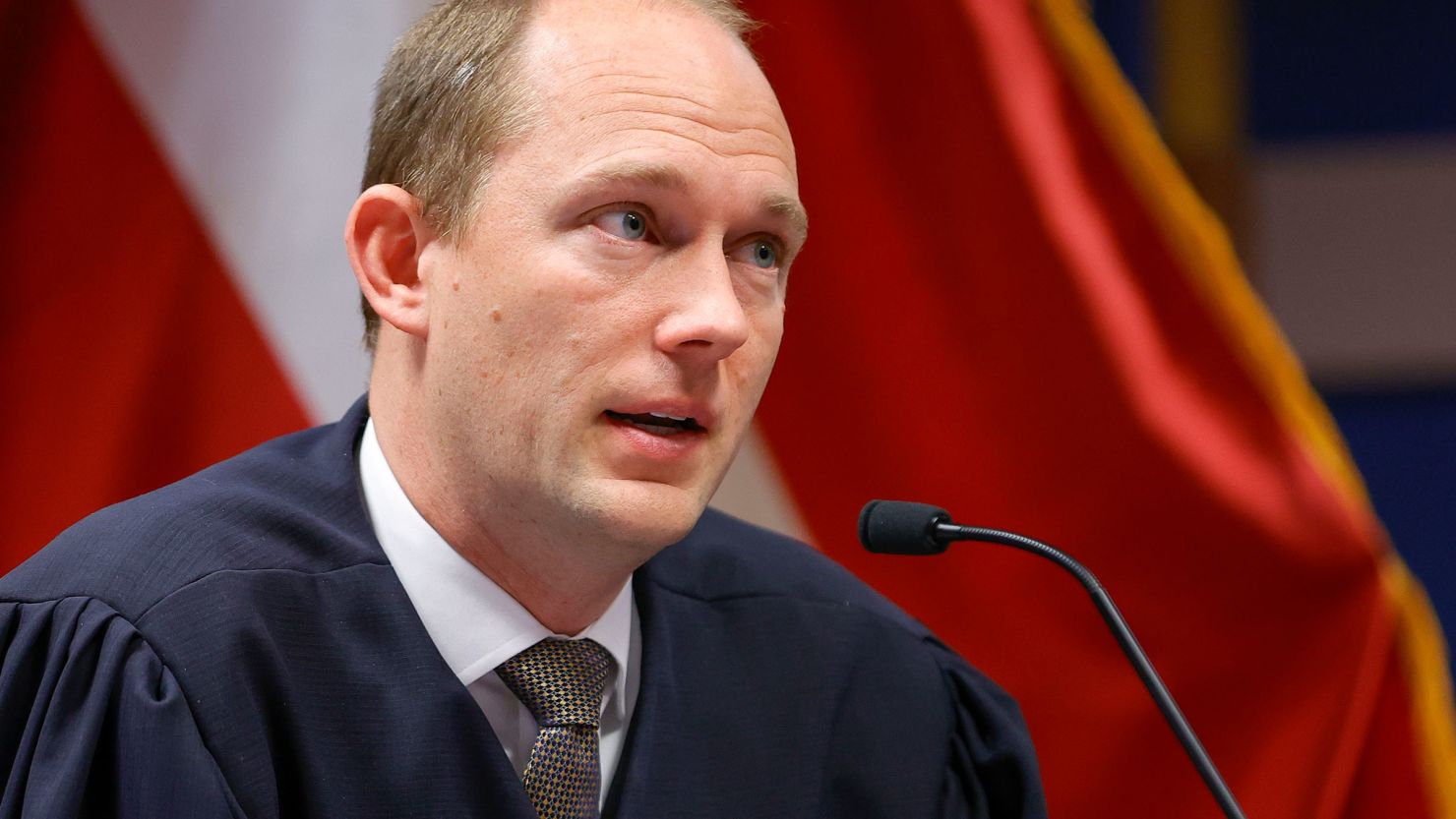
Fulton Co. Superior Court Judge Scott McAfee
Donald Trump‘s legal team, for example, says the fight is not over after the decision. Trump lead defense counsel on the case, Steve Sadow, flatly says the judge’s decision “did not afford appropriate significance to the prosecutorial misconduct of Willis and Wade.” Sadow’s statement goes on to cite “financial benefits, testifying untruthfully about when their personal relationship began, as well as Willis’ extrajudicial MLK black ‘church speech,’ where she played the race card and falsely accused the defendants and their counsel of racism.”
“We will use all legal options available as we continue to fight to end this case, which should never have been brought in the first place,” Sadow continued. That means the Trump attorneys will appeal McAfee’s order to the Georgia Court of Appeals.
After all, as McAfee concluded in his order, “an odor of mendacity remains.”
By the way, some of our readers are emailing to ask a big question: Where is state Attorney General Chris Carr in the aftermath of the McAfee decision? There is a Georgia Code section which compels the Georgia AG to investigate if an affidavit is presented to him which accuses a DA of a felony (perjury, witness tampering, violation of oath of office). Will that happen? It remains to be seen what Carr, who openly has gubernatorial aspirations, will do. (The attorney general, if asked by the governor, could get the Georgia Bureau of Investigation to fully investigate a Willis conflict-of-interest and other potential crimes, should he so choose.)
National media commentators, of course, are all over this case. Professor Jonathan Turley, for example, sees in the Georgia case a broader, nationwide problem: ”the odor of selective prosecution.” Turley (who is no fan of Trump) cites a number of cases in support of his view that the selective prosecution of persons and views on the right has become intolerable.
Finally, Willis is also targeted by a Georgia Senate committee that intends to seek further evidence about the conflict-of-interest. And the U.S. House of Representatives Judiciary Committee has subpoenaed Willis to testify about her conflict of interest and collusion with the Biden White House to selectively prosecute the former president and his allies. She has defied the subpoena so far. Court observers believe she will have to relent soon.