
Some failures in life cannot be explained away, justified, or blamed on someone else. Mine is one of them.
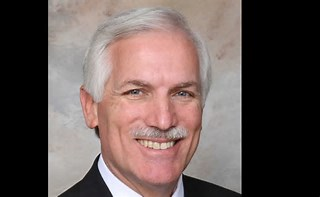
Dean Alford
For more than 40 years, it was an extraordinary honor to serve the state of Georgia in various capacities. I was blessed to serve as an elected official and later to be appointed to some of the most significant boards and institutions in state government. I never took those opportunities lightly. The trust that came with those positions was a privilege— and I violated it.
Our choices have consequences, and I experienced those consequences firsthand.
My decisions eventually resulted in a criminal conviction and more than four years of incarceration in the Georgia Department of Corrections system. There is no way to soften that reality, and I don’t intend to.
I betrayed the trust of people who believed in me. I embarrassed my family and friends. I disappointed those I had the privilege of serving, and violated the confidence of people who entrusted me with positions of responsibility and leadership.
For that, I am deeply sorry.
I owe them— and the people of Georgia— a public apology.
When Everything Was Stripped Away
Prison was a difficult and humbling experience. It stripped away virtually everything I had once used to define myself. My title didn’t matter. My accomplishments didn’t matter. My past didn’t matter.
Behind those walls, I was simply an inmate.
And in that place of brokenness, God began rebuilding me.
I do regret deeply what I did. I regret deeply going to prison. But I do not regret being in prison, because it was there that God taught me mighty lessons and prepared me for the next chapter of my life.
I learned that repentance is more than saying you are sorry. It means turning around and allowing God to change the direction of your life. I learned that forgiveness is not something we earn. And I learned that God’s grace reaches us even in the places where we have fallen the farthest.
God Was Still at Work
One of the greatest blessings of my incarceration was the opportunity to help establish a church inside the walls of Coweta County Prison. What began with a small group of men became a ministry that continues to bear fruit. Over the past four years, 159 men have been baptized.
But the number 159 is not what matters most.
What matters are the lives behind those numbers.
I watched men who had made serious mistakes discover that their worst decision did not have to be the final chapter of their lives. I saw men come to faith in Christ, marriages begin to heal, fathers reconnect with their children and men who had lost hope discover that God had not lost sight of them.
Their stories reminded me of something I had to learn for myself: a person’s worst failure does not have to be the end of his story.
The Family Goes to Prison Too
Prison taught me another lesson I had never fully understood: when someone goes to prison their family goes through the experience with them.
A prison sentence affects far more than the person behind the walls. Spouses experience loneliness and financial hardship. Children grow up without a parent at home. Parents and grandparents carry worry, shame, and uncertainty. Families often struggle to know where to turn for help.
Then comes release.
I learned that the period between a person’s release from prison and the time he or she becomes stable is critical. A returning citizen may genuinely want to change, but good intentions alone are often not enough. They need a community willing to walk alongside them.
This realization became the beginning of a new calling.
A New Chapter of Service
Today, I am helping lead Family Prison Ministries, Inc. (FPM), a ministry born directly out of what God taught me behind prison walls.
Our mission is simple: “To provide Christ-centered support to incarcerated individuals as they transition out of prison, and to their families during their confinement.”
Our vision is to develop a statewide network of “Prison Friendly Churches”— churches equipped to provide hope, healing, restoration, encouragement, and practical support to families affected by incarceration and to returning citizens rebuilding their lives.
I cannot rewrite my past. I cannot undo the hurt I caused or restore the trust I violated with a single apology. Trust must be rebuilt through a lifetime of changed behavior.
But I can take responsibility for what I did.
I can be grateful for God’s forgiveness.
And I can spend the rest of my life helping others find the hope and restoration I found behind those walls.
God Does Not Waste Our Brokenness
My incarceration was a consequence of my failure, but by God’s grace, prison also became the place where God began preparing me for a new purpose.
I once believed my greatest contribution to Georgia was behind me.
Today, I believe God is calling me to something greater— not to reclaim a position, but to serve people who desperately need hope.
Perhaps that is one of the greatest lessons God taught me in prison:
God does not waste our brokenness when we surrender it to Him.
Dean Alford is the executive director of Family Prison Ministries Inc. His email is familyprisonministriesinc@gmail.com