
(Publisher’s note: With crime rising in Georgia’s capital city, we asked Fulton County’s Chief Magistrate Judge Cassandra Kirk about the role of the Magistrate’s Court, its open and closed cases and how it engages with the community.)
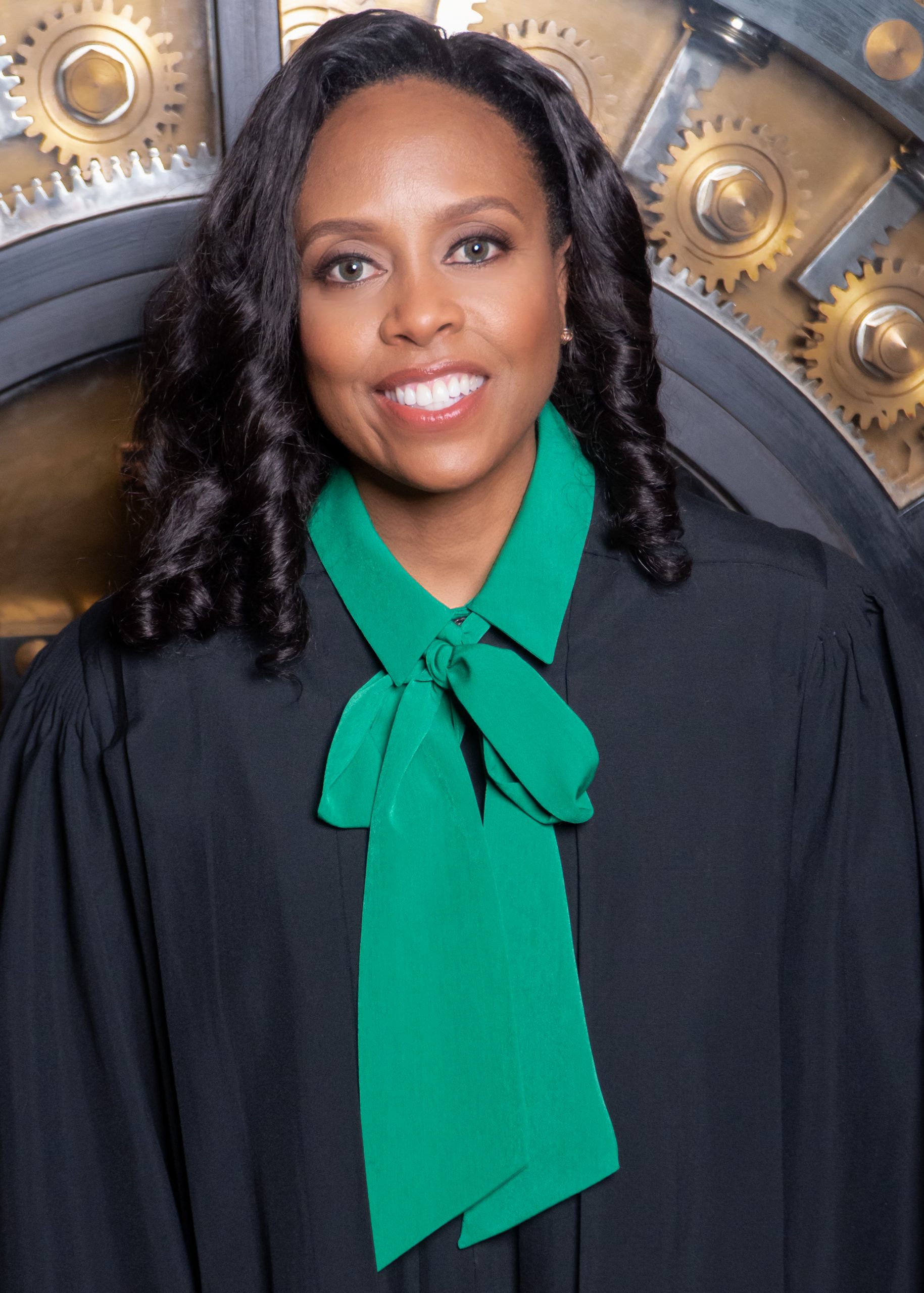
Fulton Co. Chief Magistrate Judge Cassandra Kirk
QUESTION: How did this form of the Magistrate Court come about?
JUDGE KIRK: In 2012 a Fulton County Court Improvement Task Force recommended the restructuring of our Magistrate Court to create an entity directly accountable to the litigants and to the electorate. In 2013-14 our state legislature, led by state Reps. Wendell Willard, Harry Geisinger, Jan Jones, Edward Lindsey, Mike Dudgeon and Lynne Riley, created the Court’s new form under which we operate today. As chief magistrate judge, I was appointed to this nonpartisan role by then-Gov. Nathan Deal and given authority to create the Court, by directing its operations and appointing and assigning additional judges. I won a contested election in 2018 and ran unopposed in 2022.
In this capacity, I appoint and lead a team of 30 judges (8 full time and 22 part-time), approved by both the State and Superior Courts. Since 2014, I have created a Court that is fiscally responsive, aware of litigants’ time and seeks to Inform, engage, and empower our community.
QUESTION: What exactly does the Magistrate Court of Fulton County do?
KIRK: The Magistrate Court is a limited jurisdiction court that handles civil and criminal cases. We hold no jury trials. Our civil jurisdiction includes landlord-tenant, small claims, garnishment, and abandoned motor vehicles actions where damages are $15,000 or less.
On the criminal side, we review search and arrest warrants 24 hours a day and conduct first appearance 6 days a week, as well as handle county ordinance violations and citation cases. By designation, we provide judicial support to the Superior Court of Fulton County primarily on the felony non-complex division. Our Misdemeanor Mental Health Court (MMC) began as a pilot program in July 2018 and is a voluntary court program to divert and support eligible misdemeanor citizen-defendants with mental health concerns. MMC is a joint justice project that operates in partnership with the State Court, Solicitor General, Public Defender, and behavioral health.
In August 2020, the MMC program became state certified and in August 2021 Coordinator Georgee Corley earned her status as state-certified coordinator. Our MMC program track record includes: 14 graduations, 74% graduation rate, 65 graduates, and less than 1% recidivism rate. In November 2021 we opened our Rapid Education Assistance Court Help (R.E.A.C.H.) Clinic, a legal navigation service to assist parties with small claims, garnishment, and warrant application cases, staffed by a law clerk and volunteer students from the law schools of Emory University and John Marshall. The R.E.A.C.H. Clinic provides free legal navigation to people with cases in Magistrate Court and gives our community an opportunity to speak with a licensed attorney, law students, and other staff. Individuals with questions about these case types may use the clinic for help navigating their case, completing forms, and understanding court procedure.
As a Court, we never stopped providing crucial services for the people of Fulton County and we reopened with zoom, in-person, and hybrid hearings. We partnered with Community Resources to reimagine eviction as a cure for default, created judge teams to address landlord-tenant cases, Writs, and AMV, and small claims cases, and utilized technology to support customer service with our TextGov Chatbot, brochures, and website. We also upgraded the Emergency VPN to remain connected to our law enforcement partners.
As of May 5, 2022, we have maintained our case time to disposition standards. TOTAL CASES FILED 213,387 (2019-2022) TOTAL CASES CLOSED 185,904 TOTAL CASES OPEN 29,554 PERCENTAGE CLOSED 87.12%
QUESTION: How do you engage the community?
KIRK: We engage the community through our intern program for high school, college, and law students where we offer hands-on experience in all aspects of Court administration, case management, and legal research. We conduct annual check-ins with the 15 municipal police chiefs in the County. We participate in community service activities such as Legal Food Frenzy, gathering backpacks and school supplies for back-to-school events, and providing gifts for children for holidays, as well as Community Conversations, where our judges speak monthly with youth and families at Mt. Calvary Baptist Church on topics ranging from financial literacy, choosing friends to handling social media.
We also began a “Meet Your Judge” social media campaign and began offering weekly in-person weddings on July 15, 2021. This is in addition to our Annual Day of Love (February 14) wedding celebrations.
QUESTION: Anything else you’d like to share?
KIRK: Our judges have practiced law from 8 to 30 years and have variety of civil and criminal expertise. We are constantly learning and increasing our education through national, state, and local trainings. Given what we know about our volume and the number of litigants, we review our court rules and procedures as well as how our internal infrastructure, including routine business practices, staffing, and technology promotes procedural fairness.
We strive to ensure that people have the opportunity to tell their side of the story to a judge who listens carefully. It is important our judges explain why a party’s concerns can or cannot be accommodated in the legal setting and make it clear that we heard the needs and concerns being expressed.
Since our establishment, we have faced challenges with staffing and funding. And we are grateful for Fulton County’s ORCA funding, which increased our staffing temporarily and made it possible for our court to achieve this progress. We are hopeful that these gains can be maintained to continue to provide Fulton County court users with the best and most efficient court experience.


