
When public education embraces economic development, it identifies goals, strategies and numerous systems to support the local economy. The most critical characteristic of community growth and prosperity is education. An educated population eliminates academic, social, emotional and cultural barriers as impediments to successful families and communities.
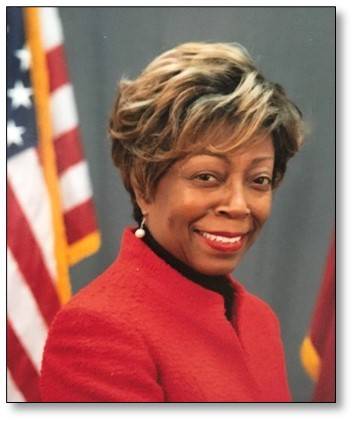
State Sen. Freddie Powell Sims
But decades of endless policy changes and teacher and leadership shortages have become new barriers to successful educational programs. Meaningless collections of supposedly data-driven school materials are also considered some of the greatest hindrances to educational and economic success. Many citizens view continuous flows of purchased materials as wasted taxpayer dollars, especially if student test scores show little to no improvement.
Recently, the following information was shared by Georgia Family Connection via Georgia Kids Count. The dismal storyline goes something like this: Over 61% of third graders in Georgia are below proficiency in Reading. In the State of Georgia, 16% of high schoolers do not graduate. Additionally, three in five Georgians have reported at least one adverse childhood experience (i.e., substance and emotional abuse, domestic violence, child neglect). Vulnerable students also suffer from complex problems created by environmental factors, mostly not of their making, such as chronic school absenteeism, foster care, homelessness, juvenile delinquency, cultural boundaries and numerous other adult failures and unnecessary juvenile complexities.
Dr. Dana Mitra of Pennsylvania State University has done extensive research on public education and how it impacts communities. Repeatedly emphasized was the importance of both pre-and post-secondary education to make communities whole and livable environments.
Dr. Mitra says public education is a worthy investment for state government with immense social and economic benefits. Research shows that individuals who graduate and have access to quality education throughout primary and secondary schools are more likely to find gainful employment, have stable families and be active and productive citizens. They are also less likely to commit serious crimes, less likely to place high demands on the public healthcare system, and less likely to be enrolled in welfare assistance programs. A good education provides substantial benefits to individuals and, as individual benefits are aggregated throughout a community, social and economic benefits are created. Investing in public education is thus far more cost-effective for the state than paying for the social and economic consequences of underfunded, low-quality schools.
This information can assist government and educational institutions in preparing students for the workplace. Thus, community leaders must grasp the theory that in order to have successful communities and successful economies, the entire State should invest in quality public schools and quality school personnel, particularly leaders.
When economies are weakened, especially in rural areas, the negative impacts can be staggering. Firstly, jobs vanish, ancillary businesses cease to exist and family members who were once employed leave the area. Tax revenue declines, leaving many social services vulnerable and unavailable to local residents. An exodus of younger employees is more likely to leave for better employment, with few plans of returning. Older residents are left unable to pay higher taxes due to lost revenue. Fewer residents equal a rise in healthcare costs; declining social, civic, and cultural activities also negatively impact these communities.
Recent budget mishaps in some school districts definitely highlight the need for citizen devotion to educational dollars and how local tax dollars are being spent. Educational leaders are entrusted with huge school budgets, averaging millions of “tax-paid” dollars. Oftentimes, these are the largest payrolls in a single county’s budget. School officials are responsible and accountable, not only for taxpayer dollars, but for quality educational pathways that lead students to become successful economic workers. These valuable tax dollars are never to be taken for granted.
Occasionally, a very few school districts have misinterpreted state and federal educational policies to take advantage of huge influxes of federal dollars. Due to the seriousness of learning loss following COVID, the majority of federal and state dollars most certainly should have been earmarked for classroom use only. However, rather than hire additional classroom support staff and purchase appropriate materials for students, already suffering from learning loss, some districts used taxpayer monies for out-of-state travel. Supposedly, this out-of-state travel was meant for educational training. The same training took place on multiple occasions within the State of Georgia.
The majority of our State’s academic leaders unequivocally understand that the fundamental expectation of education is to prepare students from birth through post-secondary schools. This huge responsibility bestowed upon educators is not an easy task. Educational leaders, classroom teachers, and educational support staff know that quality-educated students bring economic prosperity to communities. They assist in providing major services and endless resources to both residential and business communities. Through education, students blossom into information systems, civic ambassadors, and community investors.
Well-educated societies grow economies and make changes to their economies based on their needs via innovation and entrepreneurship. These producers and innovators do not relax following their successes. They are continually evolving, collaborating, inventing, plus investing to improve an ever-changing work-world.
Economic development embraces education, just as education embraces and supports developing economies. The unwavering partnership between public education and the economy is about preparation for the job market, getting students ready for an evolving workforce. Today’s workforce is defined as a multifaceted, ever-changing alignment of assorted skills that must be mastered by students to have success in the workforce.
Schools must work, not only with the business community but also with parents and other social systems that students interact with daily. Career training must be inclusive of internships, life skills, and critical thinking skills. Career training must also include entrepreneurship, financial literacy, community projects, community service, innovation, apprenticeships and research. If correctly introduced to students, this litany of skills will certainly strengthen rural communities as well as their urban counterparts. Education will always be considered the “great economic equalizer” that reinforces workforce ethics, integrity and civic responsibility, providing all mankind with unimagined opportunities.
Sen. Freddie Powell Sims represents the 12th Senate District which includes Baker, Calhoun, Clay, Dougherty, Early, Miller, Mitchell, Quitman, Randolph, Stewart, Sumter, Terrell and Webster County